





Peptide Labs: Handling & Storage Guidelines | Jupiter Peptides
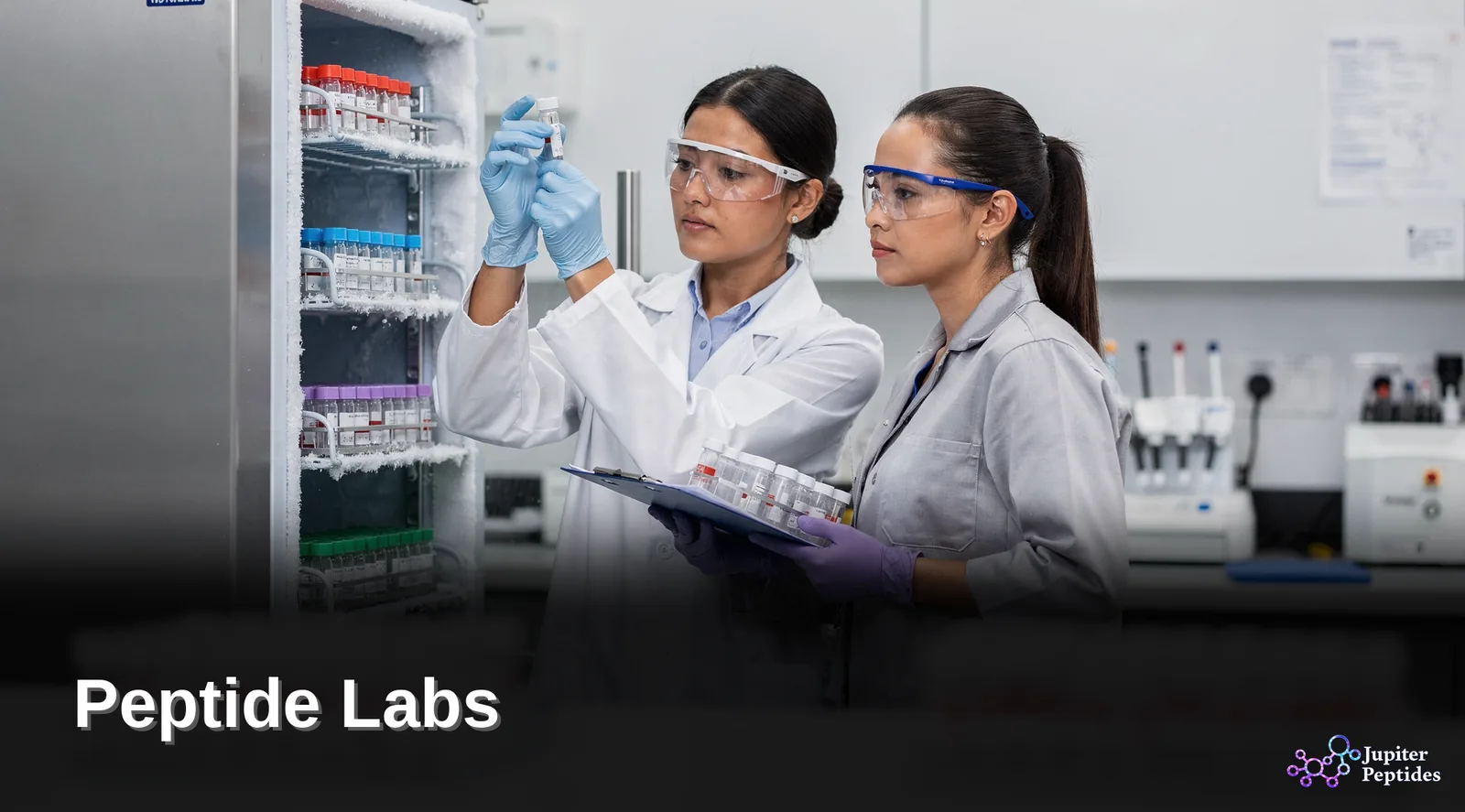
Proper handling and storage help protect peptide integrity throughout laboratory research. For many lyophilized synthetic peptides, cold, dry and light-protected storage is recommended, with -20°C commonly used for frozen storage and -80°C preferred for longer-term preservation when appropriate [1]. Exact requirements can vary by peptide, formulation and research protocol, so compound-specific documentation should always take priority over general guidance.
Jupiter Peptides independently verifies active compounds through third-party analytical testing and publishes available Certificates of Analysis in its public COA Vault. Jupiter currently reports a minimum 99% purity threshold for accepted peptide batches [2].
Key Takeaways
Keep lyophilized peptides cold, dry and protected from bright light.
For many synthetic peptides, -20°C or colder is appropriate for frozen storage; -80°C may provide better long-term stability.
Allow a cold, sealed vial to reach room temperature before opening to reduce condensation and moisture exposure.
Keep containers tightly sealed and minimize unnecessary exposure to air and moisture.
Avoid repeated freeze-thaw cycles, particularly after a peptide has been placed into solution.
Follow compound-specific documentation because peptide stability can vary significantly by sequence and formulation.
What Should Labs Verify Before Storing Peptides?
Good laboratory storage begins with documentation and a clear record of what has been received. Before placing a research compound into storage, researchers should review its identity, analytical documentation and any compound-specific handling requirements.
Inspect the shipment on arrival. Check that containers are intact and properly sealed and note any visible damage or unusual conditions.
Review analytical documentation. Where independent testing is provided, review the corresponding Certificate of Analysis and retain it with the laboratory's records.
Record sourcing and storage information. Document receipt and storage conditions according to the laboratory's own quality procedures.
Check compound-specific requirements. General peptide-storage recommendations are useful starting points, but individual sequences and formulations can require different conditions.
Why does purity verification matter before storage?
Analytical testing provides a baseline for the material before it enters a research workflow. If later results are unexpected, retained documentation can help researchers distinguish questions involving the original material from problems that may have occurred during storage or handling.
Jupiter Peptides publishes available third-party Certificates of Analysis through its COA Vault, including HPLC-UV purity data and other testing reported for individual compounds.
Who should have access to stored peptides?
Research compounds should be stored and handled according to the laboratory's established access, safety and documentation procedures. Jupiter products are sold for laboratory research purposes only and are not intended for human or animal consumption.
Researchers should also be aware that regulatory status depends on the compound and its intended use. Health Canada states that injectable peptides are regulated as prescription drugs in Canada and has specifically warned that a “For Research Use Only” label does not itself exempt a product from regulatory requirements [3].
How Should Peptide Research Labs Store Compounds?
Peptide stability depends on several factors, including temperature, moisture, oxygen, light, sequence and whether the peptide remains lyophilized or has been placed into solution.
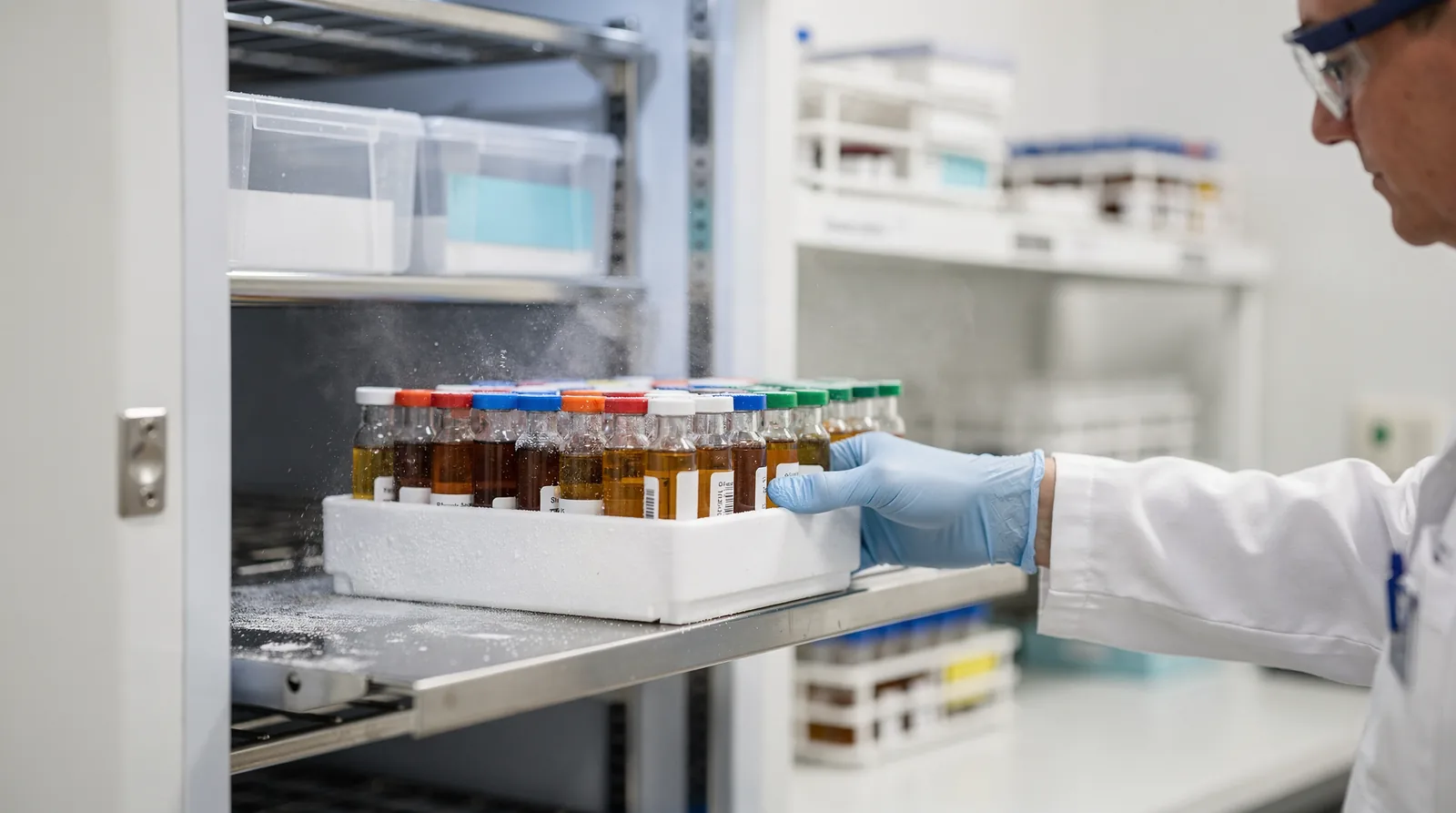
For many synthetic peptides, maintaining the material in its lyophilized form under cold, dry conditions provides better stability than storing it in solution. MilliporeSigma recommends -20°C for short-term frozen storage and -80°C for longer storage, while also emphasizing protection from bright light and moisture.
What temperature should peptides be stored at?
There is no single storage temperature that applies to every peptide.
As a general laboratory guideline, many lyophilized synthetic peptides can be stored at -20°C or colder, while -80°C may be preferred for extended storage. Product-specific information should take priority whenever it is available [4].
Some lyophilized peptides can also remain stable for limited periods at ambient temperature, which is why ambient shipment does not automatically indicate that a lyophilized sample has been compromised.
How should a lab handle a peptide before opening the vial?
Moisture is an important concern when handling cold lyophilized peptides. Opening a frozen vial immediately can allow atmospheric moisture to condense on the material.
A common laboratory practice is therefore to:
Remove the sealed vial from cold storage.
Allow the sealed vial to reach room temperature.
Open it only after temperature equilibration.
AAPPTec specifically recommends allowing peptide vials to warm to room temperature before opening or weighing the material [5].
The vial should remain tightly capped whenever it is not actively being used. MilliporeSigma also recommends minimizing unnecessary opening and limiting exposure to atmospheric oxygen [6].
What Common Mistakes Undermine Peptide Storage?
Several avoidable handling practices can reduce peptide stability.
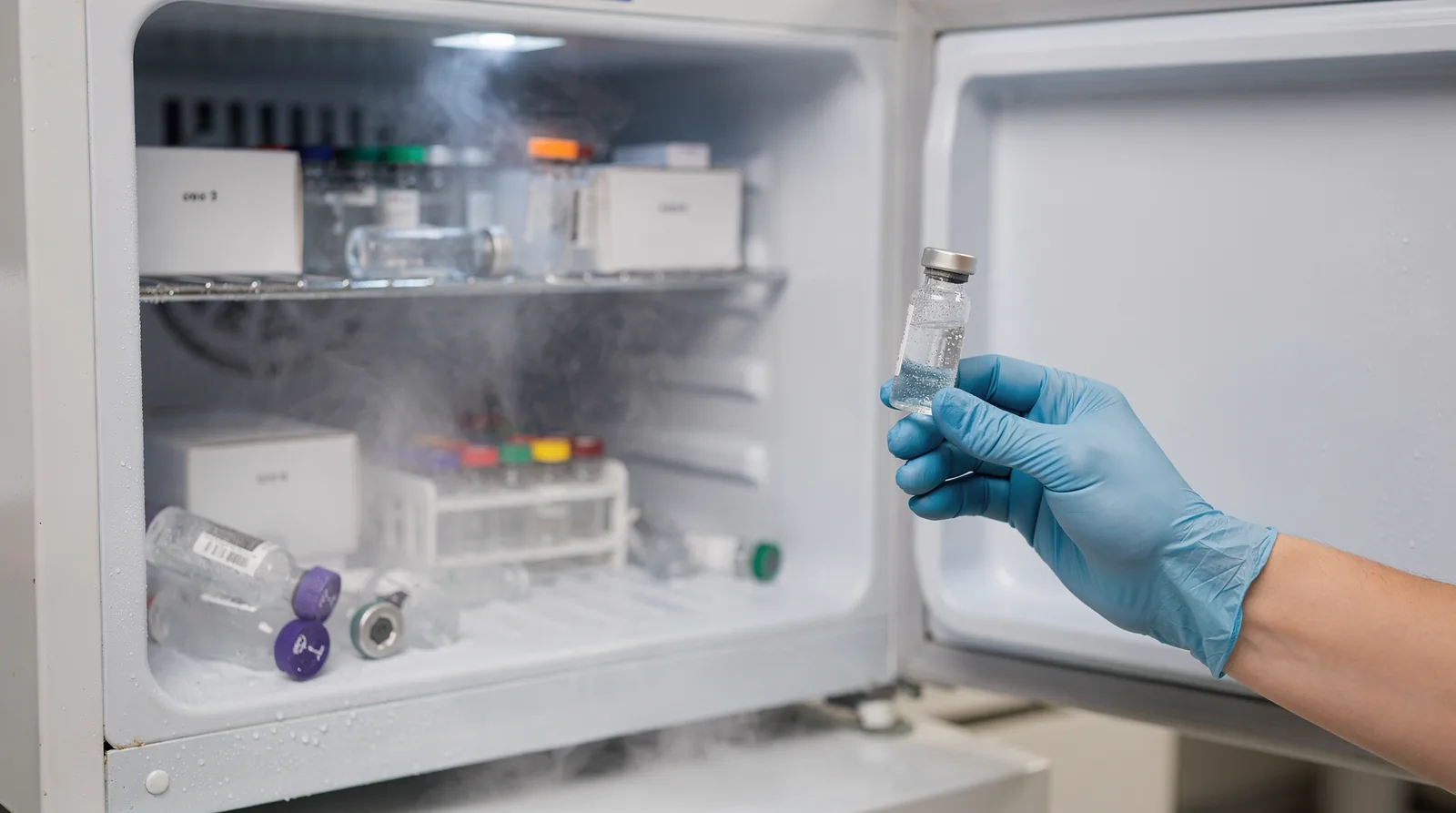
Leaving containers open or poorly sealed increases exposure to moisture and atmospheric oxygen. Repeated freeze-thaw cycles can also accelerate degradation, particularly for peptide solutions. For frequently accessed samples, laboratory protocols often use separate aliquots so the entire stock does not undergo repeated temperature cycling.
Another common mistake is assuming every peptide behaves the same way. Stability depends partly on sequence and chemical composition, so storage requirements should be evaluated for the specific material being studied.
Why Do Some Peptides Degrade Faster Than Others?
A peptide's amino-acid sequence can influence its stability. Certain residues are more susceptible to chemical changes under particular conditions.
For example, peptides containing cysteine, methionine or tryptophan can be susceptible to oxidation. Other residues and sequence features can introduce different degradation pathways. This is one reason peptide-specific handling information is more reliable than applying one universal storage rule to every compound.
Good documentation also matters. Maintaining analytical and storage records allows researchers to compare unexpected results against the material's original testing and handling history rather than relying on guesswork.
FAQ
What temperature should lyophilized peptides be stored at?
For many synthetic peptides, -20°C or colder is commonly recommended for frozen storage, with -80°C preferred for longer-term preservation when appropriate. Keep lyophilized material tightly sealed, dry and protected from bright light. Always follow compound-specific storage information when available.
Can lyophilized peptides be shipped at ambient temperature?
In many cases, yes. MilliporeSigma notes that lyophilized synthetic peptides can remain stable at ambient temperature for days to weeks, while recommending -20°C or colder for long-term storage. Shipping requirements can still vary by compound, so the relevant product documentation should be followed.
How should peptide solutions be stored?
There is no universal storage condition or shelf life for every peptide solution. Stability depends on the peptide sequence, solvent, pH, concentration and other conditions.
General laboratory guidance emphasizes limiting repeated freeze-thaw cycles and, where appropriate, dividing solutions into aliquots for frozen storage. Compound-specific protocols should determine the actual storage conditions and usable period.
Why does Jupiter Peptides verify purity?
Independent analytical testing provides researchers with documentation of the material before it enters their workflow. Jupiter Peptides publishes available third-party Certificates of Analysis through its COA Vault and applies a minimum 99% purity threshold to accepted peptide batches.
Conclusion
Proper peptide storage is not simply a matter of putting every vial at one temperature. Stability depends on the peptide, its physical form and its exposure to temperature, moisture, light, oxygen and repeated freeze-thaw cycles.
For many lyophilized synthetic peptides, keeping material cold, dry, tightly sealed and protected from light provides a sound starting point. Researchers should then follow compound-specific documentation and their laboratory's established procedures.
Jupiter Peptides supports research traceability by independently testing active compounds and making available Certificates of Analysis accessible through its public COA Vault.
Sources
[1] MilliporeSigma: Handling and Storage Guidelines for Peptides and Proteins
[2] Jupiter Peptides: third-party analytical testing... available Certificates of Analysis
[3] Health Canada: peptides are regulated as prescription drugs in Canada
[4] MilliporeSigma: Synthetic Peptide Handling & Storage Protocol
[5] AAPPTec: Storage and Handling of Peptides
[6] MilliporeSigma: Handling Storage